
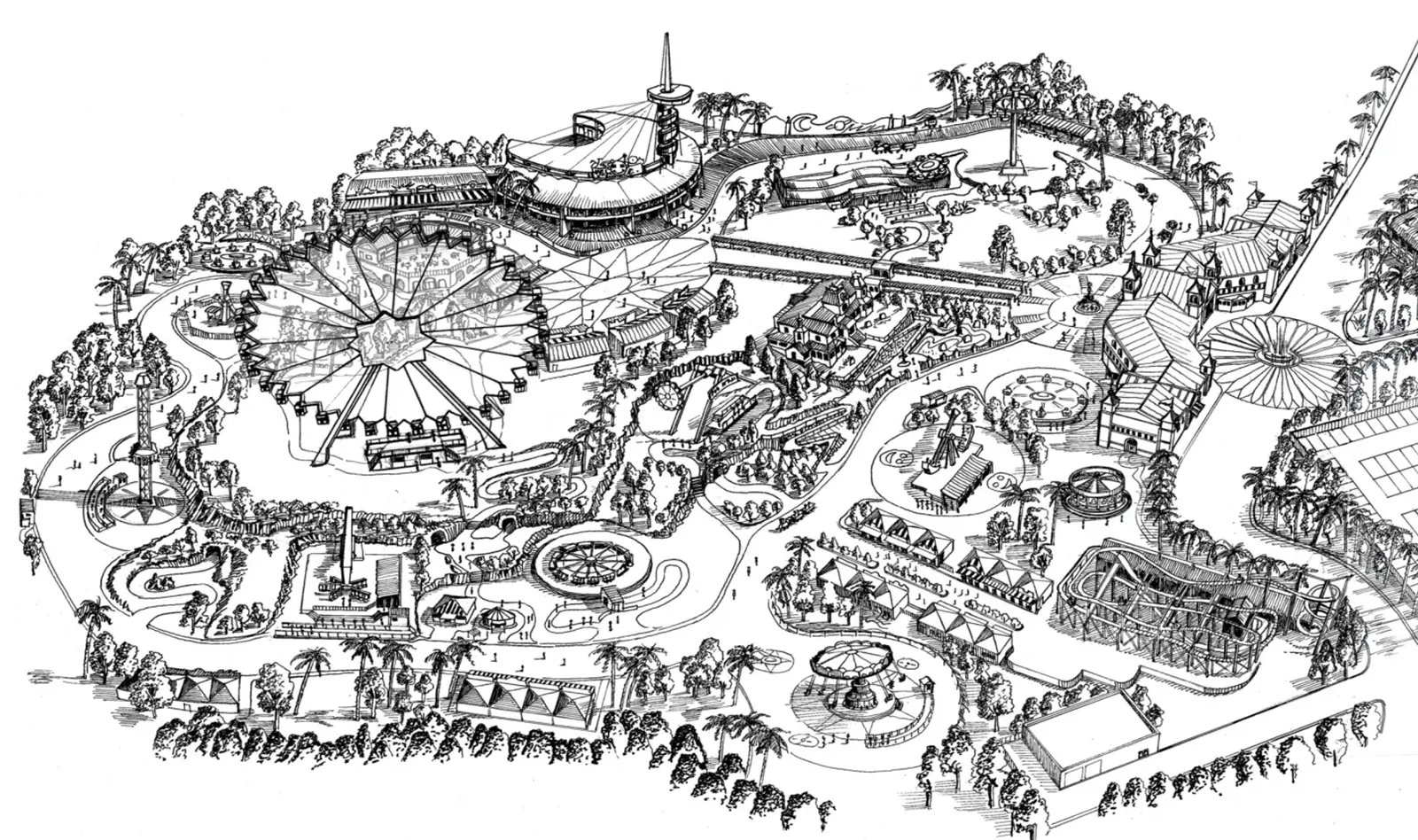
Designing successful tourism destinations, theme parks, and water parks requires a highly detailed and strategic approach, balancing guest expectations, entertainment, safety, functionality, and innovation. During the Concept Design stage, the Sanderson Global team conducts extensive research and establishes key project parameters to create memorable, world-class guest experiences.
Projects move through five design stages: preliminary concept, concept design, schematic design, then detail design and tender documents.
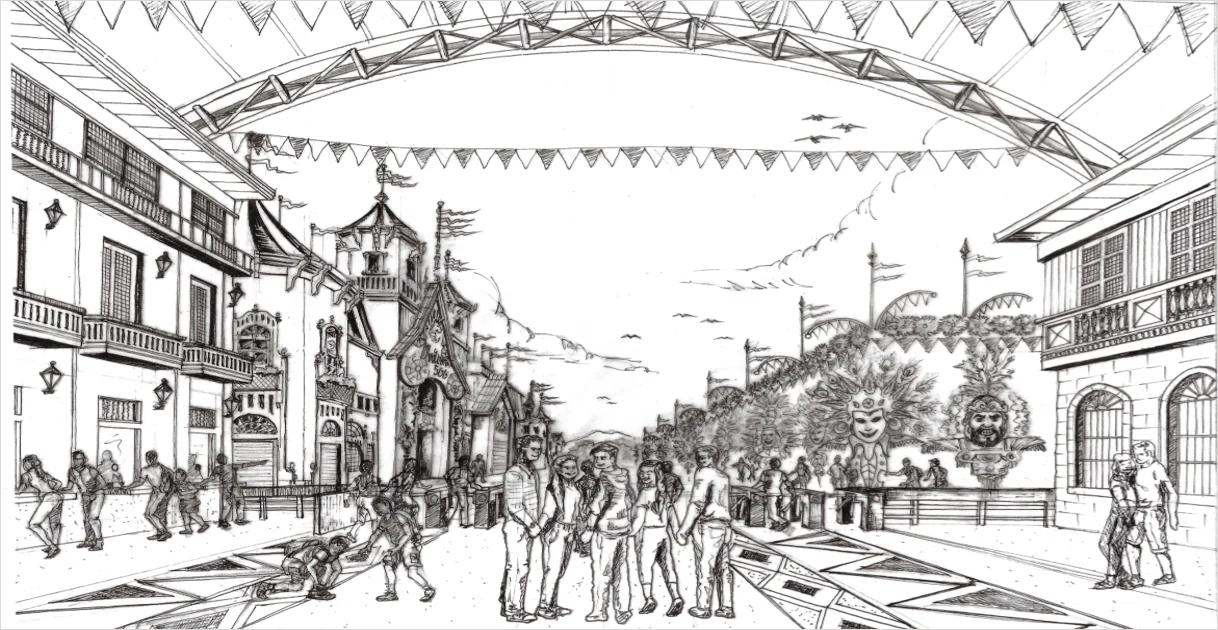
Where great attractions begin: from sketches to concepts
Every unforgettable ride, show, and attraction begins with a simple idea. Before detailed plans and immersive experiences take shape, designers start with hand-drawn sketches that capture the creative vision and explore different possibilities. These early concept sketches serve as the foundation for brainstorming, allowing multiple design directions to be presented, refined, and evaluated with the client.
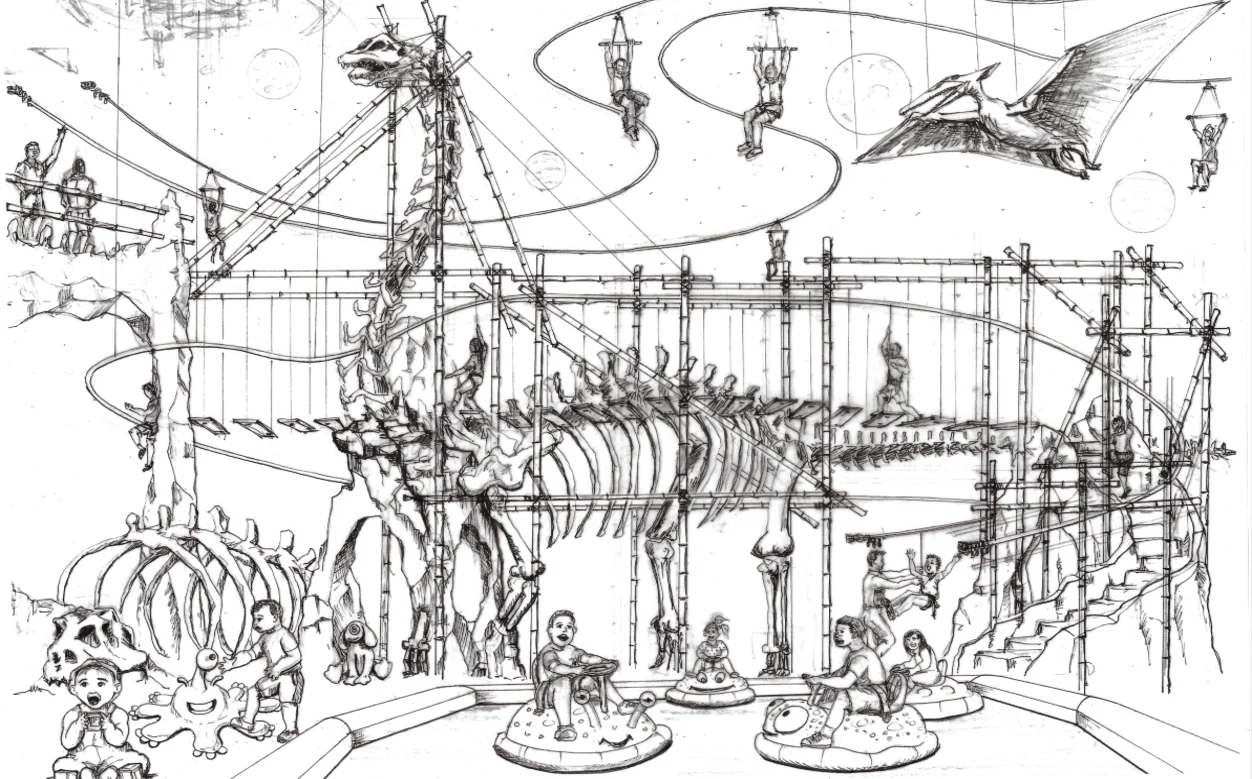
Through a collaborative design process, the creative team develops a range of concepts, each offering unique features and storytelling opportunities. Together with the client, these ideas are reviewed, discussed, and refined until the strongest direction is selected for further development. Once a concept is approved, it evolves into scaled floor plans, conceptual elevations, and rough sections that define the project’s layout and spatial relationships. Supporting sketches, reference imagery, and massing models help visualize key attractions, buildings, and themed environments while providing a clear understanding of the project’s overall form and guest experience. These early-stage concept designs are more than just drawings. They are the first step in transforming imagination into world-class destinations, laying the creative and technical foundation for successful project development.
What the concept design stage produces
The senior designers will meet with a client multiple times during the concept design phase. Each concept helps inform the refinements necessary to reach a finalized schematic design that the eventual design development is based on.
The design team will incorporate and develop the requirements of the master plan’s essential units of entertainment (U.o.E), inclusive of primary and secondary units, the park’s educational and cultural content and all rides and park attractions, together with recommendations for guest entry points, car park, restaurants, retail, and guest circulation within the park master plan.
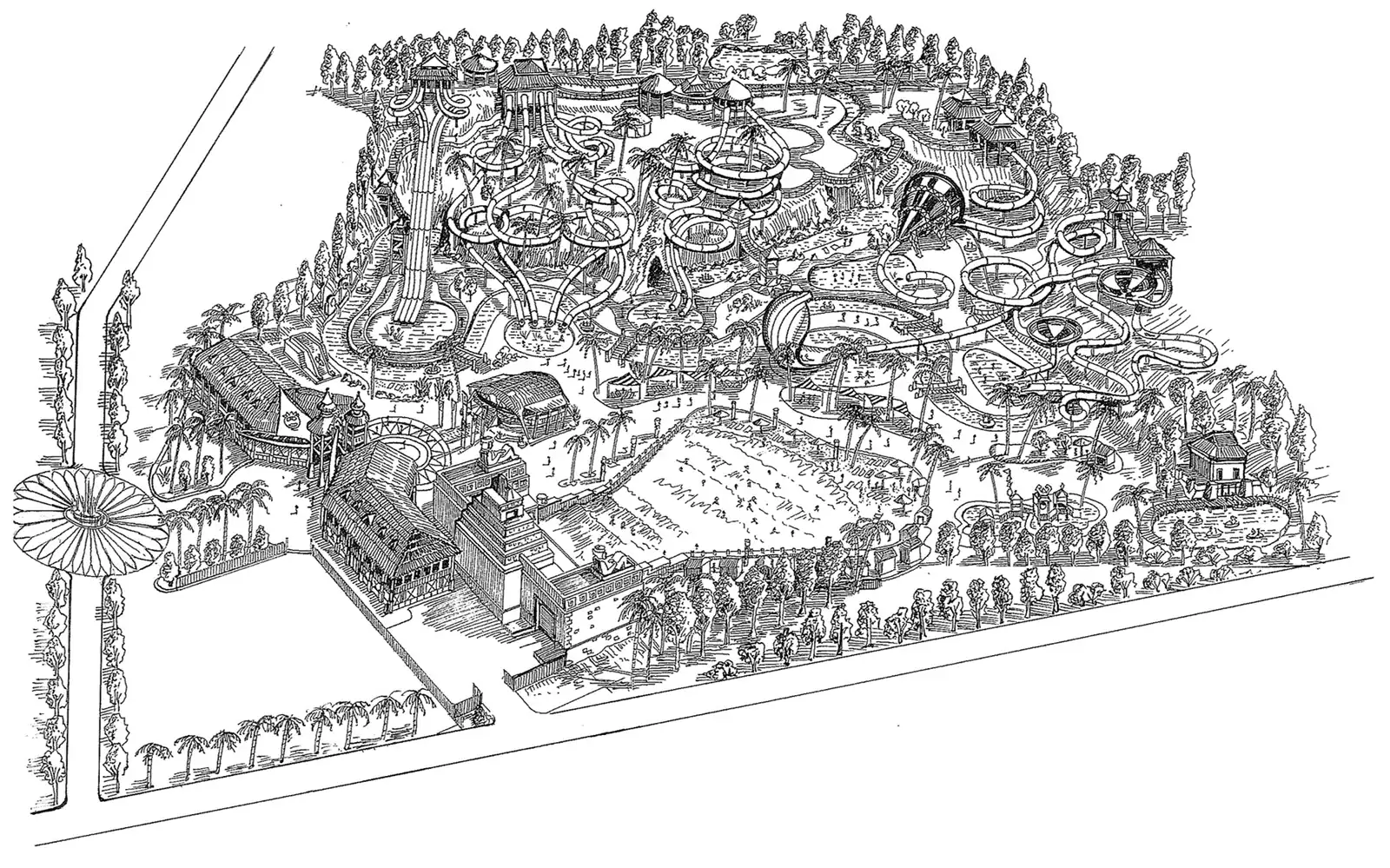
Architectural Concept Designs (CD) consist of approximated floor plans, simple elevations, and conceptual rough sections. Floor plans will be drawn to scale and may include suggested interior arrangements for the client’s acknowledgement to proceed forward. The drawings will indicate the general location of key building structures in addition to any big ideas the park’s concept is based upon.
Massing models are developed for the client to understand the relationship of volumes in the vertical plane, similar to the way that floor plans help the creative team understand the relationship of building structures in the horizontal plane. Mass models consist of simple geometric forms that represent designated areas and spaces, and they assist the Sanderson Q.S. in creating the preliminary cost budgets based on building gross floor areas.
Design development: the devil is in the detail
It’s an old saying, but it is true. The process of design is really one of theoretically building a project, trying to identify all potential problems and solutions before they actually arise during construction.
A design that is well detailed and thoroughly thought through in terms of construction details as well as buildability will end up saving time and money during construction.
An advantage for the client in this situation is that Sanderson Global has been designing and building tourism destinations since 1989. This has provided our team members with a wide range of real construction experience, which then impacts directly on the way details are designed.
During the Design Development phase, constant reviews are undertaken in order to keep refining the relationship between design and budget as the design of the attractions progresses, to ultimately achieve an agreed total budget satisfactory to the client.
The deliverables achieved during this stage are to finalize and document the design, completing all detailed drawings and specifications required for the fabrication and assembly of all units of entertainment, educational components and associated equipment, and to finalize the facility interface requirements.
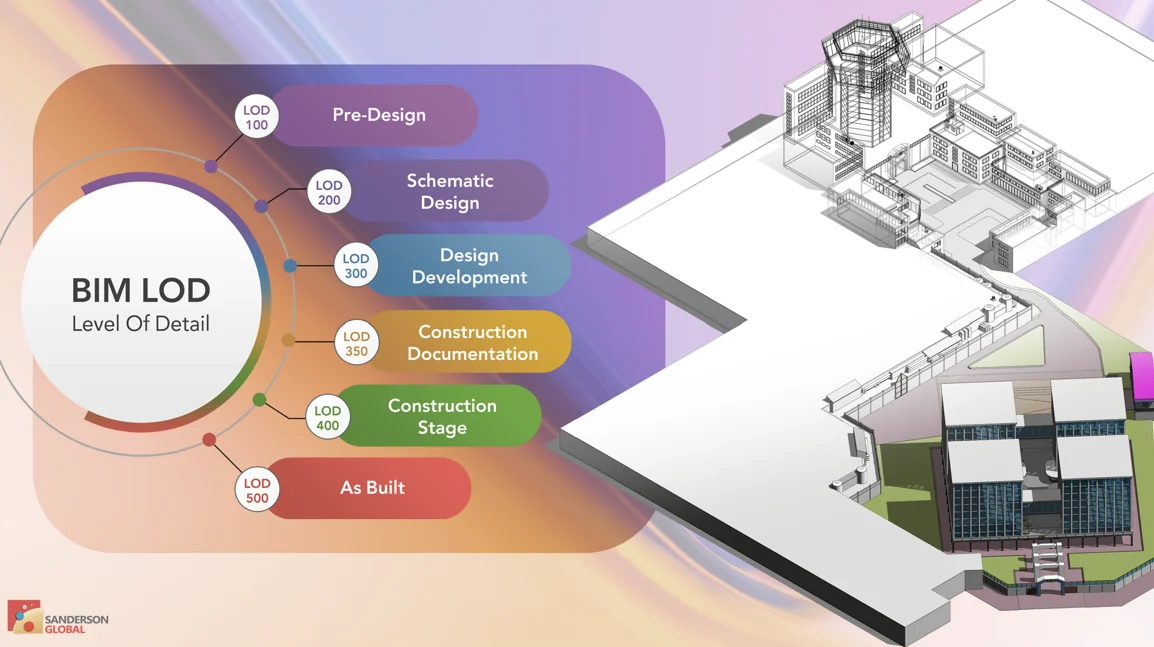
Inside the BIM modeling process
Building information modelling carries the design from stage to stage, with the level of detail (LOD) increasing from pre-design through schematic design, design development, construction documentation and the construction stage to the as-built model.
Design reviews: building quality from the start
Design reviews play a vital role throughout every phase of a project. They give clients and key stakeholders the opportunity to assess design progress, verify technical compliance, and ensure that project requirements are being met.
Beyond reviewing the overall design, these sessions also examine component selection, material choices, manufacturing methods, and quality control documentation. By identifying potential issues early, design reviews help improve reliability, reduce risks, and support the delivery of high-quality, well-engineered solutions.
The engineering behind the magic: park-wide engineering considerations
A successful destination is built on more than spectacular attractions and immersive storytelling. Behind every magical moment lies an intricate network of engineering, operations, and safety systems working together to ensure guests remain comfortable, secure, and free to simply enjoy the experience.
Air-conditioning and mechanical ventilation. Guest comfort begins behind the scenes. Indoor attractions are climate-controlled according to their unique requirements, while outdoor queue lines and pathways benefit from misting systems, eco-blowers, and cooling fans designed to combat heat and humidity.
Operations procedures. A seamless guest experience relies on meticulous operational planning. From efficient waste management and recycling programs to robust security measures, multilingual wayfinding, emergency response protocols, and dedicated service routes, every detail is designed to keep the park running safely and smoothly.
Fire safety considerations. Safety is built into the park’s foundation through a combination of passive and active fire protection systems. Escape routes, fire-resistant materials, sprinkler systems, smoke extraction, extinguishers, and centralized control facilities work together to protect guests, staff, and assets.
Traffic planning. Thoughtful traffic design ensures efficient movement throughout the destination. Internal road networks support daily operations, visitor circulation, and emergency access, allowing fire and medical services to reach every area quickly when needed.
Audio and lighting specifications. Immersion goes beyond attractions. Carefully zoned audio systems preserve the atmosphere of each themed environment, while integrated lighting enhances storytelling and reinforces the unique identity of every destination.
While visitors remember the excitement and unforgettable moments, it is these hidden systems (comfort, safety, operations, and infrastructure) that quietly make the magic possible. Together, they create experiences that are not only memorable, but dependable, efficient, and built to stand the test of time.
From design to reality: Sanderson’s turnkey methodology
Following the devastating fire that destroyed the original Star City amusement park in Manila, Sanderson Philippines was commissioned to design, build, and provide staff training for an interactive walk-through attraction. The project showcased Sanderson’s turnkey expertise, transforming a challenging situation into an engaging guest experience while supporting the park’s successful reopening.
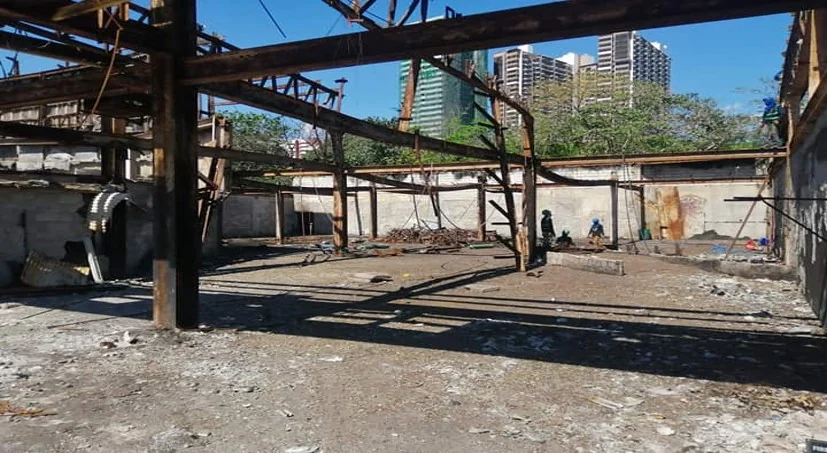
Sanderson established a dedicated on-site project office to oversee construction, coordinate subcontractors, and ensure smooth project execution. Working closely with the client, the team managed regulatory approvals, supervised on-site activities, and coordinated the delivery of materials, equipment, and labor.
Regular site coordination and progress monitoring ensured that each phase of the project remained aligned with the design intent, schedule, and quality standards. Through close collaboration and proactive management, the team successfully transformed the project from concept into a fully realized guest experience.
More built work is in our From Design to Reality portfolio, and every phase of our theme park design services is set out on our Expertise page.
More from our Insights series:
- Theme Park Master Planning and Zoning: From Vision to Master Plan
- Storytelling in Theme Park Design: The Foundation of Thematic Design
- Theme Park Commercial Planning: The 7P Process, Target Market and Sponsorship
Planning a theme park, water park or integrated destination? Talk to the Sanderson Global team.